Is Moringa the Same as Drumstick? Everything Indians Need to Know
If you grew up in South India, you know drumstick. The long, ribbed pods that end up in sambar. The ones you pick up with your fingers, bite through the fibrous shell, and scrape out the soft flesh inside. The ones that appear at every family lunch without much ceremony, because they are simply there.
Now there is this thing called moringa powder. Wellness shops sell it. It comes in green packets. People are mixing it into their morning water.
Here is the thing: it is the same tree.
Moringa and Drumstick — Same Tree, Different Parts
Moringa oleifera is the scientific name for the drumstick tree. It grows throughout India—in backyards, along roadsides, on farms. It is one of the most commonly grown trees in South Asia.
The pods used in sambar and curries are the drumstick: the long seed pods of the Moringa oleifera tree.
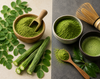
Moringa powder is made from the leaves of the same tree—dried and ground into a fine green powder.
Two different parts of one plant. One is a vegetable you have been eating your whole life. The other is a nutritional supplement that is currently being called a superfood by the rest of the world.
The drumstick vegetable and moringa powder come from the same plant—Moringa oleifera. One is the pod. The other is the leaf. India has been growing this tree for centuries.
Why Are the Leaves Different from the Pods?
The pods (drumstick) and the leaves (moringa powder) have different nutritional profiles. The pods are lower in calories and high in dietary fibre—great as a vegetable but not particularly dense in vitamins and minerals.
The leaves are where the nutrition concentrates. Moringa leaves contain:
- Vitamins A, B, C, and E
- Calcium and iron in meaningful plant-based amounts
- All nine essential amino acids, making moringa a complete plant protein
- Potassium and magnesium
- Antioxidant compounds including quercetin and chlorogenic acid
This is why the leaves, not the pods, are dried and powdered for use as a supplement.
The seeds are also used—pressed for moringa oil, which has culinary and cosmetic uses. The roots have been used in traditional medicine, though they contain certain compounds that make them less suited for everyday consumption.
So Why Is Moringa Powder Suddenly Famous?
The honest answer is: it is not sudden. Moringa has been used in India, Africa, and South Asia for centuries. What is recent is the global wellness market discovering it.
Moringa oleifera was listed by the World Health Organization as a potential nutritional intervention for malnourished communities in developing countries—not because it is exotic, but because the leaves are genuinely nutritious, the tree grows easily in tropical climates, and the whole plant is useful.
The "superfood" labelling came later, mostly from Western wellness culture. In India, we were just calling it the drumstick tree and eating it for dinner.
A Small Correction
Moringa is not a recent discovery. It has been in Indian kitchens and medicine for a very long time. What is new is the powdered supplement form—which is simply a more concentrated and convenient way to access the nutrition in the leaves.
How Do Moringa Leaves Become Moringa Powder?
This process matters more than most people realise.
The leaves are harvested from the Moringa oleifera tree—ideally at peak maturity, when the nutrient concentration in the leaves is highest. They are then dried. Low-temperature drying preserves more of the heat-sensitive vitamins than high-heat processes.
After drying, the leaves are milled into a fine powder. Quality moringa powder from good-quality leaves, dried carefully, will be a vivid green. Powder that has been overprocessed or made from inferior leaves tends to be a duller, brownish-green.
Finally, the powder should be tested for nutritional content, heavy metals, and microbial safety. This step distinguishes a trustworthy product from one that is simply riding the moringa trend.
Can You Get the Same Benefits from Eating Drumstick?
Drumstick (the pods) and moringa powder (the leaves) are nutritionally quite different. Eating drumstick regularly is excellent for your diet, but moringa leaf powder provides a more concentrated source of vitamins, minerals, amino acids, and beneficial plant compounds.
Think of it this way: eating an orange gives you some Vitamin C. Taking a concentrated Vitamin C extract gives you more in a smaller volume. Moringa powder is a complement—not a replacement—for drumstick.
How to Use Moringa Powder if You're Already Eating Drumstick
There is no conflict. Eating drumstick in your dal or sambar and also taking half a teaspoon of moringa powder daily is perfectly fine. They are different parts of the same plant with different nutritional profiles.
For most people in South India, eating drumstick already means there is a cultural familiarity with the plant. The powder is simply another way to enjoy the same tree's nutritional benefits.
Frequently Asked Questions
Is moringa and drumstick the same plant?
Yes. Moringa and drumstick both refer to Moringa oleifera. Drumstick is the pod, while moringa powder is made from the leaves.
Which part of the drumstick tree is moringa powder made from?
Moringa powder is made from the leaves of the Moringa oleifera tree. The leaves are dried and finely ground into powder.
Is moringa powder the same as eating drumstick in sambar?
No. The pods and leaves have different nutritional profiles. Both are healthy but not interchangeable.
What is the scientific name of the drumstick tree?
Moringa oleifera. It is widely grown across India and many tropical regions of the world.
What is moringa called in Tamil? In Hindi?
In Tamil, it is called Murungai (முருங்கை). In Hindi, it is known as Sahjan or Sehjan.
Can I replace moringa powder with drumstick leaves from my garden?
Fresh drumstick leaves are nutritious and can be cooked. However, moringa powder offers a more concentrated and convenient source of nutrients for daily use.