Moringa vs Matcha: Which Green Powder Is Right for You?
Both are green. Both come in powder form. Both get added to drinks and smoothies by people who are trying to do something better for their health. And both have had their moment of being called a superfood.
But moringa powder and matcha are very different things—in where they come from, what they contain, what they cost, and who they are suited for.
This is an honest comparison. No brand is paying for either side of this. The goal is to help you figure out which one actually makes sense for your routine.
Where They Come From
Moringa Powder
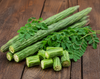
Moringa powder is made from the dried leaves of Moringa oleifera—the drumstick tree, which grows naturally across India, Africa, and Southeast Asia. It is a warm-climate tree that has been part of traditional food and medicine in South Asia for centuries.
The powder is simply dried leaves, milled into a fine powder. No special processing. No particular terroir required. Good moringa powder comes from leaves harvested at peak maturity and dried carefully to preserve nutrients.
Matcha
Matcha is shade-grown Japanese green tea (Camellia sinensis) ground into a fine powder. The shade-growing process increases chlorophyll and L-theanine content. Traditional matcha is grown in regions such as Uji, Nishio, and Kagoshima, where quality depends heavily on cultivation and processing.
Good matcha requires specific growing conditions, careful shading, and skilled processing. This is why genuine ceremonial-grade matcha is expensive.
What They Actually Contain
| Nutrient / Compound | Moringa Powder | Matcha |
|---|---|---|
| Vitamins | A, B1, B2, B3, C, E | C, K, B Vitamins |
| Minerals | Calcium, Iron, Potassium, Magnesium | Minimal amounts |
| Protein | All 9 essential amino acids | Minimal protein |
| Antioxidants | Quercetin, Chlorogenic Acid, Beta-carotene | EGCG (Epigallocatechin Gallate) |
| Caffeine | None | 30–70mg per serving |
| L-theanine | Not present | Present |
| Chlorophyll | High | Very High |
| Calories | About 20 calories per teaspoon | About 5 calories per teaspoon |
| Curcumin | Not present | Not present |
The key difference is simple. Moringa is primarily a nutritional supplement rich in vitamins, minerals, and amino acids. Matcha is primarily an antioxidant-rich beverage that also provides caffeine and L-theanine.
Moringa powder is a nutritional supplement. Matcha is an antioxidant-rich stimulant. They solve different problems.
The Caffeine Question
This is the biggest practical difference for most people.
Matcha contains caffeine—typically between 30 and 70mg per serving. Combined with L-theanine, it produces what many people describe as calm, sustained focus.
Moringa powder contains no caffeine whatsoever. That makes it suitable for any time of day without affecting sleep.
If you want to replace coffee or enjoy a gentle energy boost, matcha is the better choice. If you want daily nutrition without stimulants, moringa has the advantage.
Cost: The Honest Comparison
Good matcha is expensive. Genuine ceremonial-grade Japanese matcha typically costs between ₹800 and ₹3,000 or more for just 30g.
Moringa powder is considerably more affordable. At around ₹330 for 150g with approximately 50 servings, a daily serving costs only a few rupees.
For long-term daily use, this price difference becomes significant.
Taste: Which Is Easier to Use Every Day?
Matcha has a grassy, earthy, slightly bitter flavour with noticeable umami notes. When prepared correctly, it is smooth and enjoyable. When prepared poorly, it can become quite bitter.
Moringa powder has a milder earthy taste that blends easily into water, buttermilk, smoothies, juices, or soups. Most people find it easier to include in their daily routine.
Which One Should You Choose?
Choose Moringa Powder If:
- You want daily vitamins, minerals, and complete plant protein.
- You prefer a caffeine-free supplement.
- You want an affordable long-term wellness habit.
- You enjoy ingredients rooted in Indian tradition.
- You follow a mostly plant-based diet.
Choose Matcha If:
- You want a natural caffeine boost with calm focus.
- You specifically want high EGCG antioxidant content.
- You enjoy the ritual of preparing traditional matcha.
- You are comfortable paying a premium price.
Consider Both If:
Many people use both. Moringa can provide everyday nutritional support, while matcha can be enjoyed before work, study, or whenever extra focus is needed. They complement rather than replace each other.
From HIP's Perspective
We make moringa powder, so we naturally believe in its value. However, this comparison is meant to be honest. If your goal is affordable daily nutrition that fits easily into Indian food habits, moringa powder is the more practical choice for most people. Matcha remains an excellent option for those specifically looking for caffeine, L-theanine, and a premium tea experience.
Frequently Asked Questions
Is moringa powder better than matcha?
Not necessarily. Moringa is primarily a nutritional supplement, while matcha is an antioxidant-rich tea with caffeine. The better choice depends on your personal health goals.
Does moringa powder have caffeine?
No. Moringa powder is naturally caffeine-free, making it suitable for morning, afternoon, or evening use without disturbing sleep.
Which has more antioxidants—moringa or matcha?
Both are rich in antioxidants, but they contain different compounds. Matcha is known for EGCG, while moringa contains quercetin and chlorogenic acid. Each offers unique health benefits.
Can I use moringa powder instead of matcha?
Yes, if you simply want a nutritious green powder. However, moringa will not provide the caffeine or L-theanine found in matcha, and the flavour profile is different.
Is moringa powder available in India?
Yes. Moringa oleifera is native to India and grows throughout the country. HIP Moringa Powder is sourced from Indian farms and offers an affordable alternative to imported Japanese matcha.